Showing posts with label style. Show all posts

Monday, January 26, 2009

SAG Awards - The Red Carpet.

Before I get to the awards, I hope this guy has another project in the works soon, because I'm already dying to see it--whatever it may be.

I'm admitting it: I just watched E!'s Fashion Police dish about the red carpet fashions at the SAG Awards last night. I was curious to see what they thought. Evan Rachel Wood, Kate Winslet, and Freida Pinto were my favorites. Also really liked Laura Linney, Penelope Cruz, Anne Hathaway, January Jones, Emily Blunt, Claire Danes, and Taraji P. Henson's choices. Most of the "Desperate Housewives" looked truly awful, and Angelina Jolie looked like she was wearing a blue sheet. The Fashion Police chose Penelope Cruz and Josh Brolin as the best dressed, Nicollette Sheridan and Judah Friedlander as the worst, and Monique Lhuillier as the best designer--Teri Hatcher can be forgiven for Evan Rachel Wood's get up, in my mind.

I'm not big on fashion. I occasionally read my sister's Teen Vogues. I like watching the stars arrive on the red carpet at award shows. That's about it. Marc Jacobs in Interview did make me accept it more. So did, haha, this:
Miranda Priestly: [Miranda and some assistants are deciding between two similar belts for an outfit. Andy sniggers because she thinks they look exactly the same] Something funny?
Andy Sachs: No, no, nothing. Y'know, it's just that both those belts look exactly the same to me. Y'know, I'm still learning about all this stuff.
Miranda Priestly: This... 'stuff'? Oh... ok. I see, you think this has nothing to do with you. You go to your closet and you select out, oh I don't know, that lumpy blue sweater, for instance, because you're trying to tell the world that you take yourself too seriously to care about what you put on your back. But what you don't know is that that sweater is not just blue, it's not turquoise, it's not lapis, it's actually cerulean. You're also blithely unaware of the fact that in 2002, Oscar De La Renta did a collection of cerulean gowns. And then I think it was Yves St Laurent, wasn't it, who showed cerulean military jackets? I think we need a jacket here. And then cerulean quickly showed up in the collections of 8 different designers. Then it filtered down through the department stores and then trickled on down into some tragic casual corner where you, no doubt, fished it out of some clearance bin. However, that blue represents millions of dollars and countless jobs and so it's sort of comical how you think that you've made a choice that exempts you from the fashion industry when, in fact, you're wearing the sweater that was selected for you by the people in this room. From a pile of stuff.
I think it's interesting though--the concept of using a person as a living, breathing work of art. Everything matters: skin, eyes, bone structure, hair, color, fabric, accessories, shoes. And what makes the red carpet more interesting is that the people wearing the clothes aren't just models--there's more intimacy because these are public figures with whom we associate with particular images, particular expression of their personalities. It's not just about how they look but how comfortable they appear--how they wear the clothes. I mean, Susan Sarandon presented last night. She does a lot of older-women-pants/blouse numbers, but she was wearing a fitted black dress, and she looked so uncomfortable--she was moving so awkwardly, that she didn't look good. It would have been better if she wore something she could feel like herself in.

I was a little surprised that the E! report kept discussing the dresses as works of art. I suppose I shouldn't have been--Christian Siriano was giving his two cents--and I have to say, I kind of enjoyed listening. I disagreed with them on a few counts--I didn't think Penelope Cruz's neckline made her worthy of "best dressed," thought it was definitely something different and classy, and I didn't think that Angelina Jolie should be able to get away with wearing a blue sheet just because she's Angelina Jolie. I also wasn't a fan of Amy Adams's dress. The Fashion Police literally fawned over her. I liked her hair and makeup, loved the color--but that pouf on the waist was a little much, and it drew the attention away from her face and hair, which were her strong points. It fit her well, though, the color and style were suitable, and she took a risk--and that's really what matters.

They kept saying it, over and over: "The color is great, but it just doesn't fit." "The color makes her look completely washed out, but it fits her perfectly." "She took a risk, it didn't work, but she did try." "It's a little too young for her." These really basic ideas kept popping up, especially in terms of fit and color. They panned Marisa Tomei for wearing a yellow dress that didn't suit her skintone at all and for not choosing the proper makeup--look at the bags under her eyes. And they loved how age-appropriate Kyra Sedgwick's dress was, while still being classy and sexy. Marcia Cross, they claimed, wore an inappropriate dress that was a work of art but not right for the SAG Awards, but one woman argued that she did take a risk when a lot of others were playing it safe.

That's one thing I find interesting about fashion as a medium of art. Blockbuster movies and popular music have trends that move kind of slowly, it feels. Someone finds a formula and everyone copies it, and it makes a lot of money and steals center stage for a long time. Fashion, to me, feels like it's constantly in motion. Every season there will be fashion weeks in Milan, Paris, New York. There'll be new designers, new models, new trends, new color combinations and patterns. What was "in" last season will almost certainly be out next season. It opens the door for a lot of creativity and a lot of invention. There's always something different coming. It may be hideous and stupidly impractical, and it'll probably be silly, but it'll still be there. For instance, Christian said that liquidy, metallic dresses like Emily Blunt's last night are an upcoming trend. I can't remember the last time I saw someone pull off a completely metallic dress on the red carpet. But I bet in a few years, no one will be doing it again. Dresses with pockets were big a few years ago, around 2005, the same year Hillary Swank, Maggie Gyllenhaal, and Sandra Bullock all had lovely navy blue dresses and Keira Knightley and Reese Witherspoon wore dramatic gowns at the Oscars. Navy's out again, for now. But that'll probably change again soon.

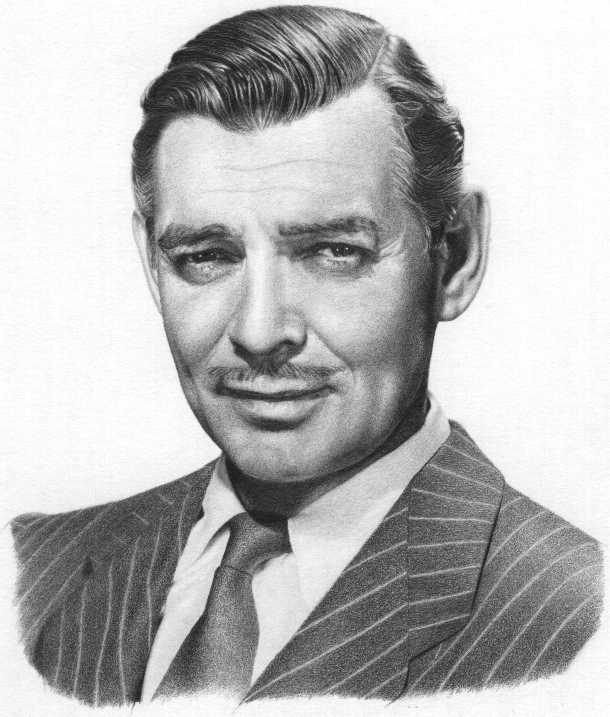
On a separate note, I didn't like Brad Pitt's facial hair choices, but E! pointed out--he kind of had a fairer Clark Gable look going on. Hahaha.

Okay. Back to work.

Monday, October 13, 2008

Jack Kerouac: "the originator of blue-collar cool"

First. Follow-up to that last post:

Check this out. Look at the photo caption, and the second paragraph. That's the Civic vs. the 13er. Right there.

On a completely separate note, I was leafing through an old GQ from last year - GQ's 50 Most Stylish Men of the Last 50 Years, I believe it was. Lots of great pictures in that - so classy. I pulled two pages from it and stuck them on my bulletin board. The first was a series of photos of Cary Grant, arguably the most stylish of them all. The other featured a wonderful picture and bit on Paul Newman, praising the simplicity of his wardrobe choices, and on the other half, Jack Kerouac. This is what they said about him:
Flower power was all well and good, but Jack Kerouac often wondered aloud how the Beats could’ve given birth to such Technicolor bravura. Kerouac’s look was broken but unbowed—as he once said: “ragged, beatific, beautiful in an ugly graceful new way.” And yet his aesthetic is everywhere today: That Brooklyn hipster rocking overalls under his Carhartt jacket while reading Hart Crane? That kid in San Francisco sporting scuffed oxfords and a frayed collar, with Madame Bovary stuffed in his back pocket? They’re paying unwitting tribute to the man who exploded the 1950s world of straight-white pretensions, rejecting the notion that class was synonymous with value. An uneven artist perhaps, and a troubled one to be sure, but unequivocally a man: the originator of blue-collar cool.
Kerouac and his fellow Beats floated around the cusp of the G.I. Generation and the Silent Generation, by Strauss and Howe's definitions. Though technically a G.I., Kerouac belongs with Ginsberg and Cassidy in the Silent Generation of artists that came of age in the G.I.'s "get it done" world.

I love that description of Kerouac. It's so true. That description, in particular, reminds me of a particular turn of phrase in Fitzgerald's Tender is the Night. Dick Diver is talking to Rosemary about a WWI trench and battlefield they are exploring.
'All my beautiful lovely safe world blew itself up here with a great gust of high explosive love,' Dick mourned persistently. 'Isn't that true, Rosemary?'
'I don't know,' she answered with a grave face. 'You know everything.'
In my mind, that is what Kerouac did: he blew up the beautiful lovely safe world with a great gust of high explosive love--in the best way possible. He was only one of many to do so, but still. He coined the term "Beat" in reference to Neal Cassady, but people today remember him as the frontman of that generation.

Kerouac was utterly brilliant. Born to Canadian parents, he grew up speaking French, became fluent in English, and I believe was well versed in German as well. He spent his school years reading every American, British, French, German, Russian, and Sanskrit classic he could get his hands on, reading translations only of the latter two. He went to Columbia University on a football scholarship, only to break his leg during the first game his freshman year. He ended up dropping out, I think, and then came his first of two stints in the Navy. It was after that that he met Ginsberg, Burroughs, and the others. Cassidy was his real inspiration, though; Dean in On the Road (which, I'll admit, I haven't read) is fashioned after him. It was for him that Kerouac came up with his 30 Essentials for the Belief and Technique of Spontaneous Prose, which he employs in some of his later works. Even just his journals are amazing. He changed the way people thought about writing. The scope of his influence in general--I can't even begin to imagine how many people, how many artists of all kinds he and his work have affected over the years.

Kerouac's poetry drips with the sounds of jazz and blues, and his fascination with Buddhism comes out often. Much of his work is informed by his travels around the country, and all of it was essentially taboo when he was writing in the 1950s and '60s. That was a period when most post-war G.I.'s and Silents were trying to raise straight-laced Boomer babies. It was that era I mentioned in a previous post when men were trying to maintain their wartime masculinity yet succeed in the corporate world, and women were trying desperately hard to fit the model of the perfect, feminine wife. Sloan Wilson, Betty Friedan--they both wrote in opposition, but Kerouac and the Beats--they lived it. They rejected the values society chose for them, taking a darker, seedier route instead. Even though the lifestyle and culture they chose is not one I'd chose for myself, I can't help admire the way they did their own thing when conformity was a demand that, seemingly, most Americans surrendered to.

That's the other thing that's great about that GQ piece--at the end of each section, they include a style tip related to the person they wrote about. At the end of the Kerouac segment, they wrote:
Personal style isn't about buying the trendiest labels or most expensive suits. It's about establishing a look that's all yours and sticking with it.

----------------
Now playing: She & Him - Why Do You Let Me Stay Here?

Sunday, September 28, 2008

The Many Facets of Cary Grant

I never used to understand how people could devote themselves to studying one topic or one person. I used to think biographers must get so tired of reading constantly about one person all the time. But I can understand that continuous fascination now - at least, in regards to Cary Grant.

I've only seen six or seven of his movies, and they're all from the 1930s, the decade of Screwball Comedy, which is wonderfully underrated these days. Every once in a while, I'll get on a Cary Grant kick, and become absorbed in watching movies starring him or reading more about him. When I first started reading Marc Eliot's biography of him, before I knew anything about Cary Grant, I wasn't expecting very good writing - it's over 380 pages. Granted, he went into pretty rich detail about many of Grant's 70+ films and about what Hollywood was like back then, but even without all the extra depth, it'd still be a long book: Cary Grant was fascinating.

As an actor, he was amazing. I haven't seen him in any of his more serious roles, but I will soon. Even without that, Cary Grant was wonderful at comedies. On screen, he was charismatic, charming, witty, and quick-tongued; since he was originally trained as an acrobat for Vaudeville performances, he was great at physical comedy as well, from trips to double takes and pratfalls in general. Yet you would never mistake him for a slapstick actor: he always did it gracefully and made it look so easy. The funny part is, everything he did was calculated. He didn't like performing spontaneously, he didn't like improvisation - he liked rehearsing over and over until everything was perfect. As much as he could, he chose his roles and directors carefully, never wanting to be the pursuer - always the pursued. In the comedies, he was the quintessential leading man; in the more serious films, his darker side came out beautifully. Hitchcock perfected that, it's said. I also read once that Cary Grant and Jimmy Stewart were Hitchcock's favorite leading men for his films - he directed them four times each over the course of their careers - because Cary Grant represented Hitchcock as he wanted to see himself, and Jimmy Stewart represented Hitchcock as he existed.

As a part of classic Hollywood, Cary Grant is legendary. Even disregarding his status as a performer. He was the first major actor to break the studio system. It used to be that an actor signed an exclusive contract with a studio and could only make movies for that studio, unless the studio heads agreed to lend him out to another studio for another picture. The actor didn't have much say in his career decisions. Cary Grant, though, got his agent Frank Vincent to negotiate nonexclusive contracts with both Columbia and RKO simultaneously. The Academy punished him for that. He never won an Oscar; the only Academy Award he received was an honorary one in the 1970s. 1973 I believe. There are several films where this is conspicuous - you can look at the list of who was nominated for the film, and the absence of his name is extremely noticeable, like The Philadelphia Story - Katharine Hepburn, Jimmy Stewart, and Ruth Hussey (the other 3 leads) were all nominated, and it was also nominated for Best Screenplay, Director, and Picture. Jimmy Stewart won (though he said it was his reward for not winning the year before for Mr. Smith Goes to Washington) and it won Best Screenplay. Grant didn't even to go the ceremony.

His early family life wasn't boring either. He came to the U.S. as a teenager in a Vaudeville troupe. His mother Elsie was committed to a mental institution before then; she'd been considered mad since her first son, Cary's older brother, died as a little boy. This was back when Cary Grant was still just Archie Leach from Bristol. He lived in New York with the troupe for a while, eventually finding his way to Broadway. His last stage role was a character named Cary Lockwood, then he signed with...Paramount I think. Publicists recommended he change the "Lockwood" because, I think, another star already had a similar name. Since the C and G initials were apparently doing Clark Gable and Gary Cooper well, he chose Grant.

He was married five times. His first wife was jealous of his relationship with friend/housemate and possible lover Randolph Scott. His second wife was an heiress who was giving money to her Nazi-supporting ex-husband. He had to start spying on her for J. Edgar Hoover so as not to be sent back to Britain and be drafted for the war. His third wife got him into the psychotherapy program she was in - which got him into LSD when the drug was still in experimental stages. His fourth wife gave him his only child, his daughter Jennifer, when he was about 62. And his fifth wife was still Mrs. Cary Grant when he died at 83.

The idea of the "real" Cary Grant still mystifies people. On screen, he had that charming, comedic, leading-man persona. So that's who he became in real life. He worked hard to maintain his physique, and to make sure he was always dressed impeccably. The man isn't still a style icon for nothing. In life, his look was carefully planned, yet on screen, he carried himself with a careless grace in such a way that you didn't think of him as a distant, unobtainable star, but as a human. The comedies focused on his light, ideal romantic side, while it's said that Hitchcock brought out the real Cary Grant by focusing on the dark, which I love. I like to think that the lines between the actor and the person blurred in his own confusion, and I hope there was a side to him that no one ever truly discovered. Everything about him was calculated - he shaped an image and persona and career that he wanted people to identify him with - and I heard a critic say that he stands out among actors from that period in that he never let himself become identified with an era. Clark Gable and Gary Cooper aren't seen today the way Cary Grant is, and their body of work doesn't hold up the same way his does.

"Everybody wants to be Cary Grant. Even I want to be Cary Grant. I have spent the greater part of my life fluctuating between Archie Leach and Cary Grant; unsure of either, suspecting each. I pretended to be somebody I wanted to be until I finally became that person. Or he became me."
- Cary Grant

Friday, January 4, 2008

You know, my grandfather was an egg farmer...

...I used to candle eggs at his farm. Do you know what that is? You hold an egg up to the light of a candle and you look for imperfections. The first time I did it he told me to put all the eggs that were cracked or flawed into a bucket for the bakery. And he came back an hour later, and there were 300 eggs in the bakery bucket. He asked me what the hell I was doing. I found a flaw in every single one of them – you know, thin places in the shell; fine, hairline cracks. You look closely enough, you’ll find that everything has a weak spot where it can break, sooner or later.
- Ted Crawford, Fracture

So I'm really not going where you think I'm going with this. Logically, I'd start a long bit about people's weaknesses, finding them, and what people choose to do when they find each other's weaknesses. That'd be interesting, but perhaps another day. No, I'm going into something I thought about today while driving to Island Heights to take pictures of the sunset.

My favorite days to takes pictures of the sunset in Island Heights are the days that are slightly overcast, with a few clouds but not enough to cover the sky or block the horizon. They add color to the sky as the sun sinks, and add character. I was excited because I could tell, even from home, that it was going to be lovely, and it was. The river was all frozen over and the sky was reflected on the ice.


On my way, I wondered how it is that people can watch the sun set and fail to be moved deeply by it. I am not a "religious" person, but there have been evenings when I see the sunset and mornings when I watch the sunrise, that I feel like that those moments are God. I see waves crashing and clouds parting, and brilliant streams of color and light flooding the sky, and sometimes, at a certain moment, I'll feel like I've gotten a glimpse of a higher power - of evidence of a higher power, because so much beauty cannot exist on its own. I wondered, though, how someone could see what I see, and not feel divinely inspired, or at the very least, full of warmth and life and love.

Then I thought about everything else I revel in: a good song or piece of music, a well-done film, a good book or poem, certain plays and musicals, performances of anything good, photographs and paintings and statues and pretty much anything artistic. Including style (yes, I mean clothes) and architecture (the Chrysler Building in New York is my favorite, though I have a soft spot for the old cathedrals of France). And certain feats of athleticism, too. And I wondered how people can not, at the very least, simply appreciate the beauty in them, or even see it. But then I decided that it's not true.

I realize that not everyone is going to appreciate everything that I do, because let's face it, I see beauty in a ton of things that few others would even notice, much less think about. But I decided that everyone has something - there is a way to reach everyone. Everyone has a sensitive spot, everyone has something that will move them. Even if it's as simple as getting choked up during a cliche pop song, or experiencing a change of heart after watching a soap opera, there is a way to everyone - which, to me, means that there's beauty in everything. And I'd much rather look for the beauty in people, for the sensitive spots, the places where they are vulnerable and open to feeling deeply, than look for their weaknesses.

Take my hand and lead me to salvation.
Take my love, for love is everlasting,
And remember the truth that once was spoken:
To love another person is to see the face of God.

----------------
Now playing: Les Miserables Original Broadway Cast Recording - Finale

Monday, November 5, 2007

Think of all the people that you know or have heard of, who do stupid, obnoxious, insane things. You know the ones. The people who do stuff just so they have a good story to tell, so they seem more interesting.

Now strip them of their stunts, of all the crazy things they do. Count how many of them are actually incredibly dull people when you get down to the core.

Yeah, that's what I thought.

Bottom line: you can pull as much stupid crap as you want, and you can make everyone, including yourself, think that this makes you interesting. But the more worthwhile people are the ones who are interesting without all the dressings. Substance over style, folks.